Research
Grounded in Papakōlea's values, KULA and partners co-design research with community and staff to advance health equity.
Kula No Nā Poʻe Hawaiʻi has spent decades researching and delivering culturally appropriate and community-acceptable programs and services to improve the health of community members.
KULA's research is grounded in community-based participatory research (CBPR) approaches that emphasize cultural safety and honor Papakōlea's lived experiences. Research design, implementation, and facilitation are carried out in partnership with community members and staff, ensuring that the process reflects local values and priorities. This practice ensures that research is not done to the community, but with the community, creating a true co-learning process between academia and residents.
Together, Papakōlea and KULA have demonstrated that strategies rooted in cultural safety and Native Hawaiian values are more effective in addressing health disparities and advancing health equity. By prioritizing community voices, values, and beliefs, and ensuring strong representation in the research praxis, KULA affirms that culturally grounded CBPR is both respectful and transformative.
KULA's partnerships strengthen this work, including collaborations with the University of Hawaiʻi John A. Burns School of Medicine, Department of Native Hawaiian Health, Washington State University's NEAR Center, and Tufts University, among others. These partnerships bring academic expertise together with community wisdom to advance culturally grounded solutions for health equity.
History of KULA & Research
From closing its doors to exploitation, Papakōlea now leads research rooted in hilinaʻi (trust) and aloha. KULA's CBPR practice uplifts Native Hawaiian voices, ensuring cultural safety and equity in every step.
- Prior to the mid-1970s: Research and survey canvassers were everywhere in Papakōlea. Researchers entered homes, collected data, and left without returning to share findings. These inexcusable practices left the community feeling exploited, unaware of how they were portrayed in publications, and unable to access the data collected from their own community.
- Mid-1970s: In response, Papakōlea closed its doors to outside researchers. The community remained closed to research for nearly 30 years, protecting its dignity until a new, respectful model could be established.
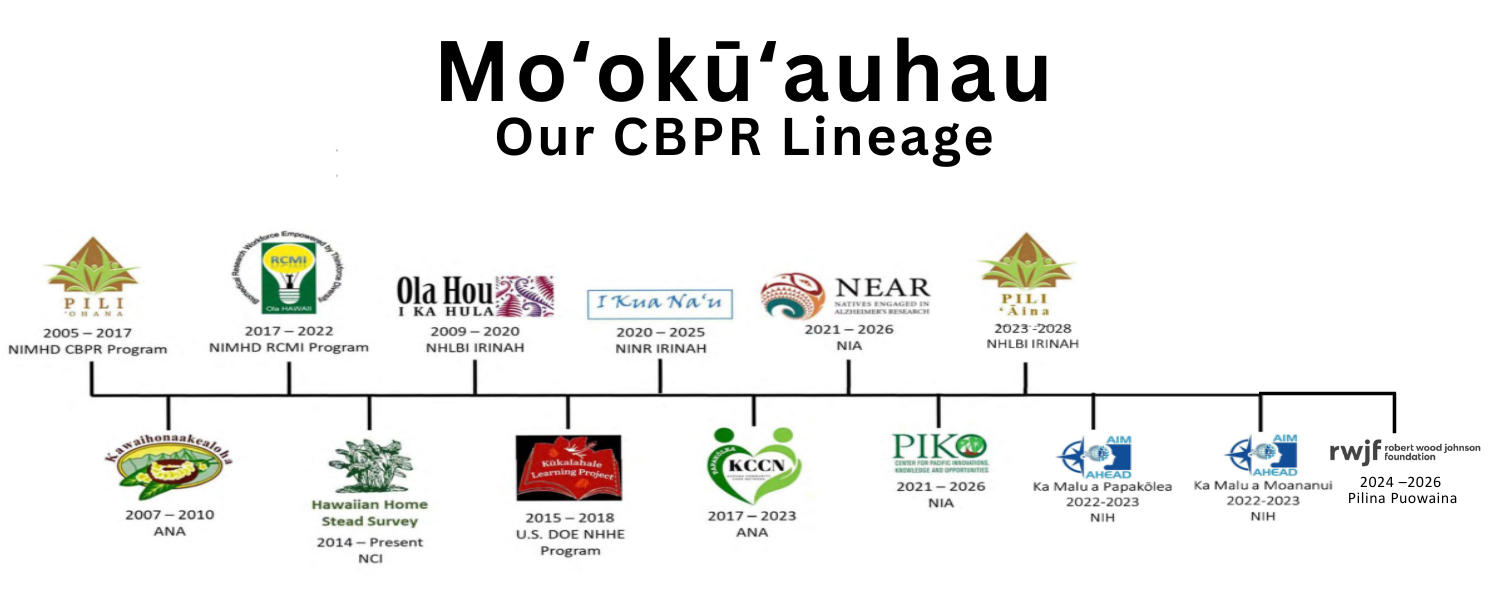
- 2005: KULA partnered with Dr. Marjorie Mau and the University of Hawaiʻi Department of Native Hawaiian Health in the PILI ʻOhana Project. This marked the beginning of community-based participatory research (CBPR) in Papakōlea, shifting the model to one of co-learning and shared ownership.
- 2010s: KULA expanded partnerships and contributed to multiple community health and equity projects, building trust and demonstrating that culturally grounded CBPR could create meaningful change.
- 2018: KULA's CEO earned her PhD, strengthening leadership capacity and securing funding for community-driven research.
- 2022: KULA led its first research project as Principal Investigator: Ka Malu a Moananui. This project embodied Papakōlea's vision of research conducted on its own terms, with community and staff guiding design, implementation, and facilitation.
- 2024-2026: Launch of Pilina Pūowaina, continuing the CBPR lineage and advancing the Hilinaʻi Model of cultural safety. This initiative deepens the integration of Native Hawaiian values into research practice, ensuring that cultural safety and community voice remain central.
Our Research

Pilina Puowaina
2024-2026
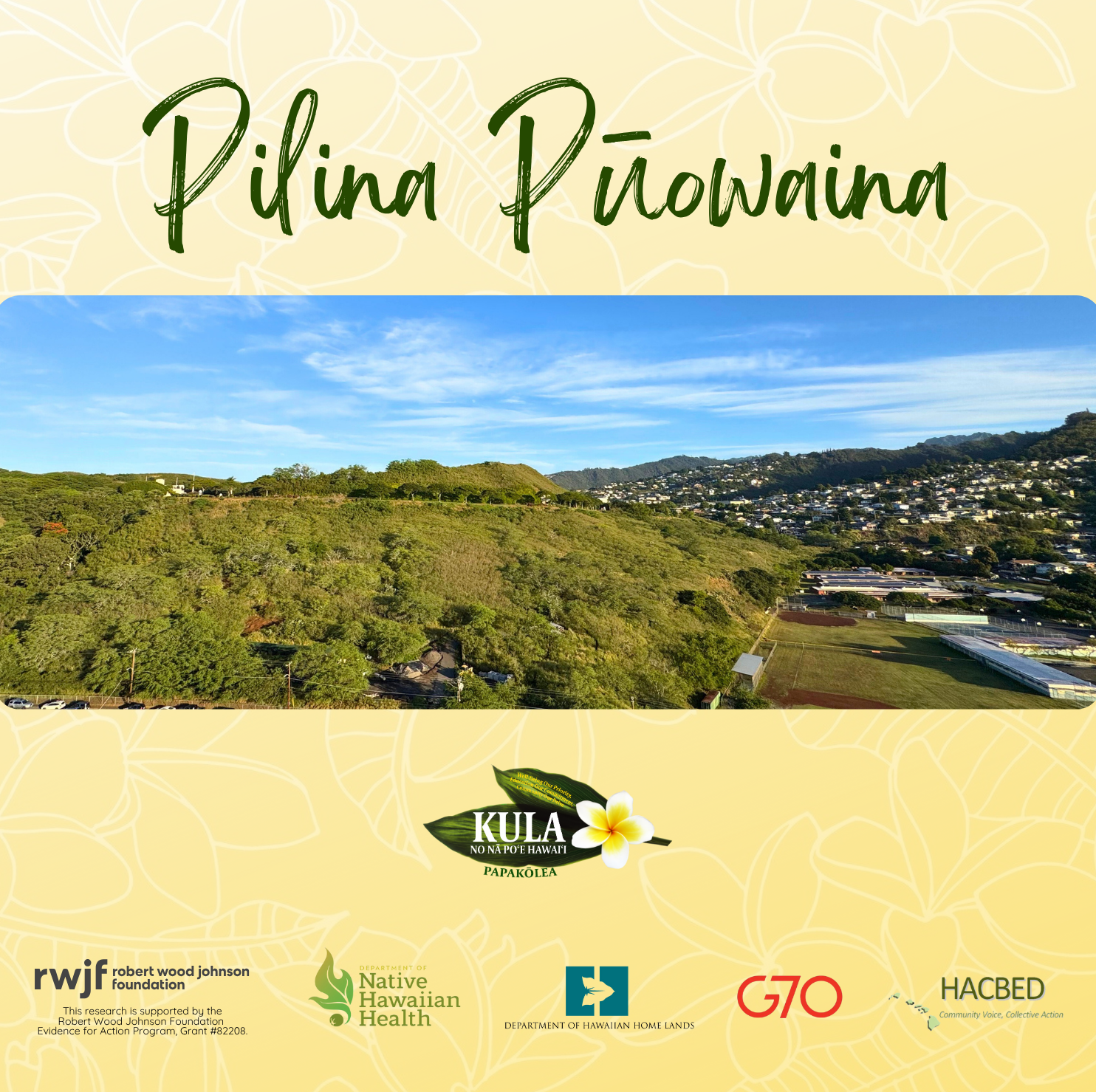
Pilina Pūowaina: A research driven community development initiative dedicated to creating a Kūpuna Supportive Living Center on the slopes of Pūowaina.
Read Our Pilina Puowaina Community Conversations Newsletters
Funded by the Robert Wood Johnson Foundation, the Pilina Puowaina project is a KULA led team working to understand the cultural values and practices instrumental in addressing the needs of kūpuna to age safely in place, and plan the Papakōlea Hawaiian Homestead Kūpuna Supportive Living Center (KSLC) at Puowaina; alongside an exploration of the current facilitators and barriers experienced within the Papakolea Homestead. Working in collaboration with residents in the Hawaiian Homestead communities of Papakōlea, Kewalo, and Kalawahine to gain necessary insights for developing the conceptual design and programming of the KSLC, specifically focusing on addressing the unique health and social needs of kūpuna while fostering a sense of community and cultural preservation.
Project Team Partners
- KULA
- Robert Wood Johnson Foundation
- Department of Hawaiian Home Lands
- G70
- University of Hawaii, John A. Burns School of Medicine, Department of Native Hawaiian Health
- HACBED
Homestead Health Survey
2013-ongoing
The Homestead Health Survey identifies health behaviors, health status, other characteristics and issues related to culture and well-being, and other related lifestyle factors of Native Hawaiians residing on Hawaiian Homesteads.
It is intended that the findings of the survey will guide homesteads in their quest for resources, programs and services that will benefit community members.
Project Team Partners
- KULA
- University of Hawaii, John A. Burns School of Medicine, Department of Native Hawaiian Health
- University of Hawaii, Cancer Center
- Papa Ola Lokahi
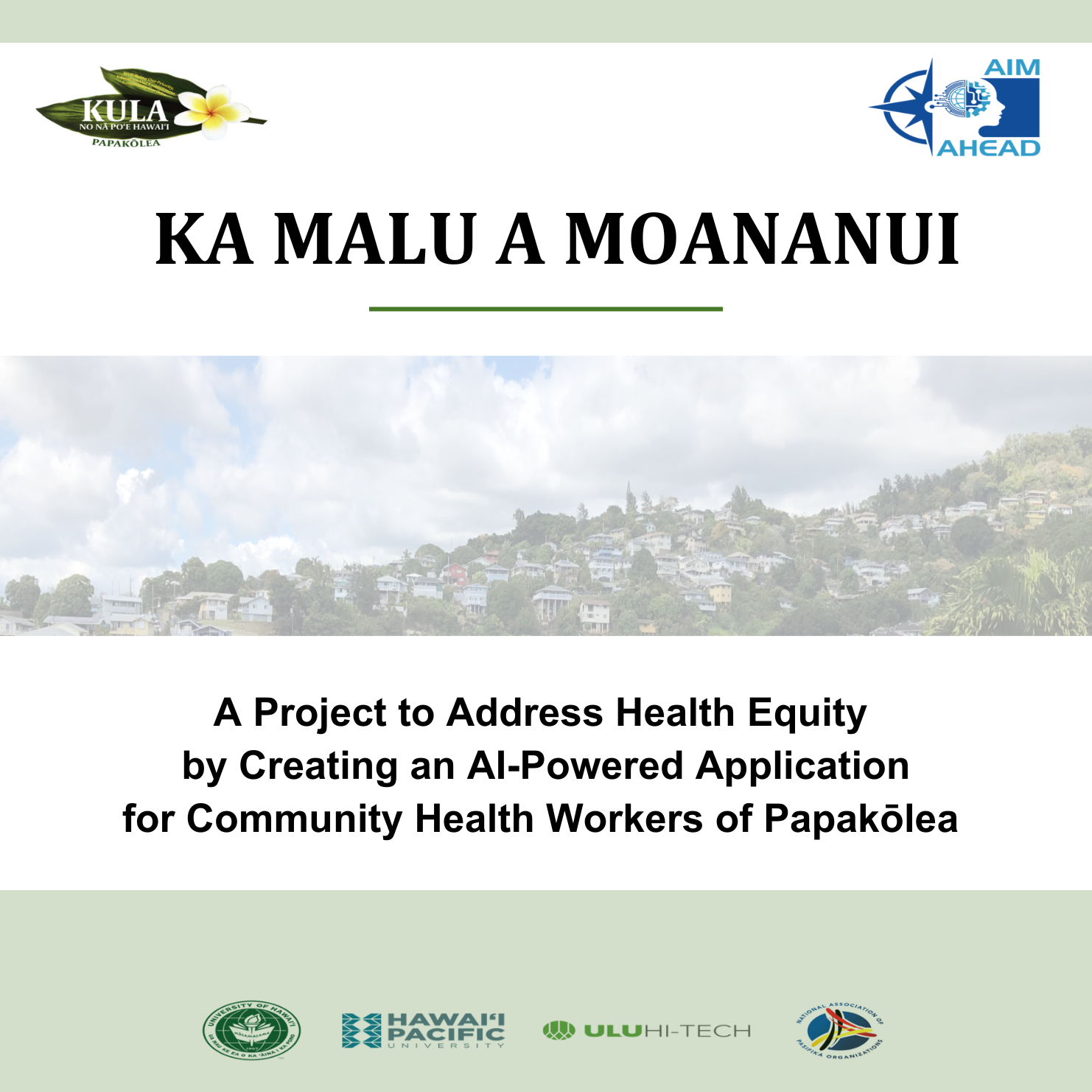
Ka Malu A Moananui
2022-2024
A Project to Address Health Equity by Creating an AI-Powered Application for Community Health Workers of Papakōlea
KULA's AIM-AHEAD project developed a community-based AI/ML model trained on existing HHS survey data to be used by NHPI Community Health Workers to assist and make information easily accessible in the field, and reinforce support for CHWs serving their communities who provide services to address health equity and social determinants of health for Native Hawaiians on Hawaiian Homesteads and Pacific Islanders in Marshallese of Marshall Islands and Chamarros of Saipan.
Central to this goal was pursuing disaggregated, accurate, and timely data; assuring accessible and appropriate services; breaking down systemic barriers; improving outreach and communications for community influencers; and focusing on building the capacity of CHWs who understand the needs and means of approach for their communities.
The project's goals:
- Use existing data collected from the Hawaiian Homestead Health Survey (HHS) to develop a machine learning application to be used by CHWs to assist them in their work with the community to make information easily accessible;
- Develop a curriculum: “A Community Based Participatory Research Approach to Machine Learning and Data Science for CHWs” to train community members and CHWs on AI/ML technology and its possible use to address community health and health equity; and
- Develop a culturally responsive approach to AI/ML with community and CHW input.
Project Team Partners
- KULA
- National Institutes of Health - AIM AHEAD, University of North Texas Health Sciences via the National Institutes of Health
- The National Association Of Pasifika Organizations
- University of Hawaii, John A. Burns School of Medicine, Department of Native Hawaiian Health
- Hawaii Pacific University, Department of Computer Science and Engineering
- ULU-HI Tech
Ike Kupuna (Elder Wisdom) Research Project
2021-2026
This project explores the transformative power of hula as an intervention to prevent cognitive decline in members of the Native Hawaiian and Other Pacific Islander communities who exhibit mild cognitive impairment or subjective cognitive impairment as part of KULA’s involvement in the Natives Engaged in Alzheimer’s Research Network.
Through our partnership with the Department of Native Hawaiian Health at the University of Hawai‘i, John A. Burns School of Medicine, KULA developed the adapted Ola Hou i ka Hula program.
This program has revealed remarkable improvements in cardiovascular health, cognitive resilience, and overall well-being among Native Hawaiian kupuna. This evidence underscores hula as a powerful, community-driven intervention that empowers individuals to age in place, and enhances early responses to dementia-related risks.
ʻAuamo Ke Kuleana O Nā Maʻi Poina
2021-2025
A KULA led adaptation and delivery of ʻAuamo Ke Kuleana O Nā Maʻi Poina, a culturally tailored, seven‑week caregiver training program based on the evidence‑based Savvy Caregiver model and designed specifically for caregivers of loved ones living with Alzheimer’s disease and related dementias (ADRD).
Led by certified KULA trainers, the program strengthens skills in daily care management, behavior guidance, resource navigation, self‑care, and decision‑making.
KULA has delivered sessions across Papakōlea, Waimānalo, and Kapolei homesteads and Anchor church. Community manaʻo affirms caregiving as a shared family and homestead kuleana and highlights the program’s cultural relevance, practical tools, and value in preparing households to support kūpuna living with dementia.
I Kua Na'u "Let Me Carry Out Your Last Wishes" Advance Care Planning For Native Hawaiian Elders
2020-2026
This research program, known as “I kua na‘u,” aimed to fill the gap in advanced care planning (ACP) for NH elders and their families by using innovative video technology to improve the process of ACP to incorporate the cultural values, personal beliefs, and preferences of future medical care.
The research program is in the process of developing a video declaration process designed for NH elders, conducting a clinical trial to test effectiveness of the intervention program, and finally, training community-based organizations to effectively use these “tools” in the future, even after the research program has ended.
Pili 'Āina
2023-2027
PILI ʻĀina is a research project designed to help NH adults eat healthier, lose weight, and improve their heart health. KULA is teaming up with the Department of Native Hawaiian Health (DNHH) and the Kapolei Community Development Corporation to tackle the unique challenges in our respective homestead communities.
This program offers a three-month, culturally relevant education experience based on the Diabetes Prevention Program’s Lifestyle Intervention. Participants learn how to manage health issues like type 2 diabetes, high blood pressure, and cholesterol while also lowering the risk of other diet-related illnesses.
Additionally, PILI ʻĀina features a six-month household aspect that provides families with important resources for home gardening and hands-on training.